
Warehouse product loss gets discussed as one number on a report, which hides the fact that it has several distinct causes with completely different fixes. Some of it is theft. A lot of it isn't. It's product that fell off a pallet and got crushed, went out the back of a rack and was never found, or sat on a sagging deck until the cases deformed.
That second category is worth separating out, because you can prevent it with hardware rather than policy. Sorted by what actually destroys the product:
Product That Falls Out of the Rack
The most expensive version, because it usually damages the product and creates a struck-by hazard at the same time.
Loads exit a rack in three places: out the back of a bay when a pallet's pushed too far, over the side at row ends where traffic clips them, and through the gap between two rows of a double-row rack. Stacking discipline doesn't close any of those. The load has to be physically contained.
Rack netting, safety straps and welded-wire mesh backing each catch the load at a different point. Mesh backing is the right answer where a rack backs onto an aisle or a walkway and the worry is cases pushing through from the other side. Safety straps are faster to fit and easier to work around where you need access from both faces. The distinction that matters is whether you're containing product or catching a whole pallet. Different loads, different products.
Forklift Strikes
The truck is the single largest source of damage in most buildings, and it damages product two ways: directly by hitting a load, and indirectly by hitting the rack the load is sitting on.
Direct hits are a training and layout problem. Indirect ones are a hardware problem, and they compound. A struck upright doesn't fail that day. It fails later, under load, and takes a bay of product with it. Column and end-of-aisle rack protection where trucks turn in is the cheapest insurance in the building, because it turns a frame replacement into a scuffed guard.
Sagging, Snagging, and Falling Through
Product stored on the wrong deck gets damaged slowly, so it rarely gets attributed to the deck.
Wire mesh with too few supports lets cases bow between wires and deform under their own weight. Wood and particleboard sag permanently, then snag and tear packaging every time something's dragged across them. Loads that overhang the rear beam with nothing under that edge sag first and eventually fall through.
Matching decking to what you actually store, and to the real load rather than the nominal one, removes an entire quiet category of loss. It matters for fire too: open decking is what lets sprinkler water reach the levels below.
Pallets
A broken pallet is the cheapest thing in the building and it destroys the most expensive.
Inspect on receipt rather than at put-away: broken deck boards, protruding nails, cracked stringers. A pallet that fails in a rack drops its load into the bay below or out the front into the aisle. This is one of the few places where the fix is genuinely procedural. There's no product that makes a bad pallet safe, only a process that keeps it out of the rack.
How the Load Is Built
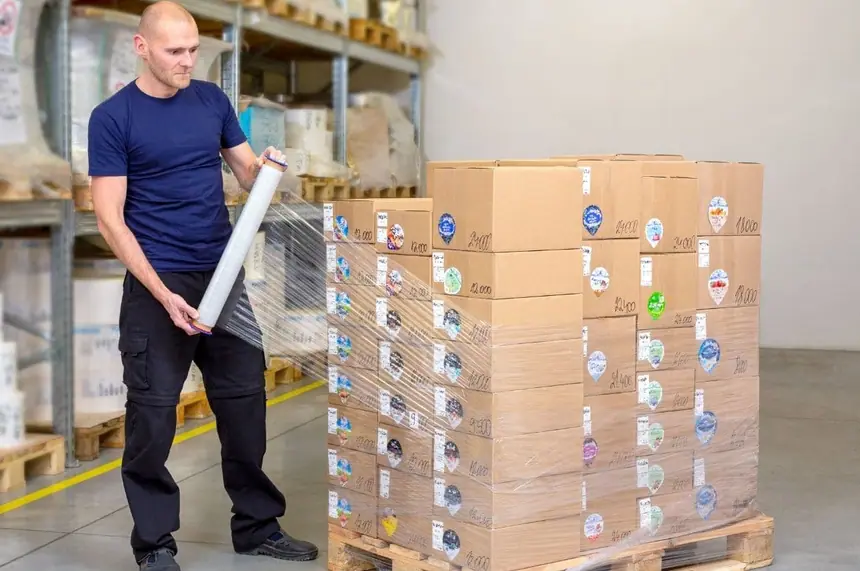
Heavy on the bottom, light on top. Nothing overhanging the pallet edge far enough to catch on the next load. Shrink wrap that reaches the pallet itself rather than stopping at the bottom case, which is the difference between a unit load and a stack of boxes standing near each other.
Obvious, and worth reinforcing anyway, because most of it erodes under time pressure rather than from ignorance.
The Damage Nobody Reports
Here's the pattern underneath most large losses. A strike happens. Nobody writes it up. The rack stays loaded. The failure arrives weeks later with no obvious cause.
Two things address it. A reporting process people actually use, which means no blame attached to reporting, or you've simply bought silence. And impact detection at the column, which flags a hit as it happens instead of waiting for a quarterly walk. Damage that gets found gets repaired while it's still a repair.
Where the Money Is
If you're trying to work out where to start, the honest ranking is: contain what can fall, protect the columns the trucks hit, then fix the decking. Those three cover most of the product loss that isn't theft.
The rest is process. Process is worth doing, but process is also the part that quietly stops happening in November. Hardware doesn't.
Want a read on which of these your building is actually losing product to? A rack safety audit will tell you, or send us your layout and we'll tell you what we'd look at first. For the loading side of this, see pallet rack spacing requirements.