
A forklift catches an upright. The column is visibly deformed at knee height, the bay is full, and somebody has to decide what happens next.
The two answers people reach for first are usually both wrong. Leave it, it's only a dent. And pull the whole run out and start over.
Most of the time the frame can be repaired instead of replaced, and it's both faster and far cheaper than tearing out and rebuilding bays. But "repairable" is a conclusion, not a starting assumption, and there's a right order to get there.
First, unload it
Before anybody assesses anything, the frame comes out of service and the load comes off.
This isn't caution theatre. A deformed column has already lost some capacity, and how much is precisely what nobody has worked out yet. Every hour it stays loaded is an hour you're betting on a number that doesn't exist.
Unload it, tag it, physically block the bay so it doesn't quietly get refilled at shift change. Then assess.
What kind of damage is it?
Not all damage behaves the same way, and the type tells you more than the size.
Front-face impact on the column. The classic strike, usually in the bottom 3 ft. Column face dented or bowed. Most common, and on its own, often the most repairable.
Side or twist damage. The column's been deflected sideways or rotated. Twist is worse than it looks, because a column resists load along its axis, and a twisted column isn't loading along that axis any more.
Bracing damage. Diagonals or horizontals bent, severed, or torn away from the column. People underrate this constantly, because the column itself can look perfect. The bracing is what stops the frame racking over and what stiffens the column against buckling. Damage it and the frame behaves differently, flawless columns or not.
Base plate and anchor damage. Plate bent, lifted or cracked. Anchors sheared, pulled, or spinning in a spalled slab. The connection to the floor is structural. A perfect frame on a failed base plate is not a safe frame.
Splice and connector damage. Damage at a column splice, or connector holes pulled and elongated by a beam getting struck. Both sit in the load path and deserve the same seriousness as column damage.
Repeat damage in the same place. A column that's been hit, repaired and hit again is a different conversation from a first strike. Structurally, and because the location is trying to tell you something about your layout.
What decides repair versus replacement
There's no universal "if it's bent more than X, replace it" number, and you should be wary of anyone who offers you one without asking about your rack first. It comes down to:
- The rack's own design and capacity. Section, steel grade, current load, and how much reserve the original design carried.
- The manufacturer's damage criteria for that rack, which is what actually governs and which varies between manufacturers.
- Where the damage sits in the load path. Damage low on a column is carrying everything above it. Damage at a splice or base plate is in a connection, and connections are less forgiving than mid-member.
- How many members are involved. One column is a repair conversation. Column plus bracing plus base plate on the same frame is usually a replacement one.
- Seismic requirements, where they apply, which change both the demands on the frame and what a repair has to restore.
That list is why assessment is an engineering exercise rather than a judgement call from the aisle. What you want out of it is a repair plan built around your specific rack: what gets replaced, what gets reinforced, and what the repaired frame is rated to carry afterwards.
Why straightening isn't a repair
The cheapest-looking option is to pull the column back into line. Heat it, jack it, hammer it straight, put the load back on.
We'll be blunt about this one: it isn't a repair, and it can leave the frame worse than you found it.
Cold-working structural steel back and forth changes its properties. Heating it without control changes them differently. Neither process restores the original section, and both can introduce residual stress and local damage you can't see once the column looks straight again. You've removed the visual warning sign and kept most of the structural problem.
Same goes for the other improvised fixes. A plate welded over the dent. A length of angle bolted across the damage. A column filled with concrete. Field welding onto an in-service rack column is the worst of them, putting heat into a member whose capacity depends on its geometry and material properties, with no analysis behind it at all.
What an engineered repair kit does
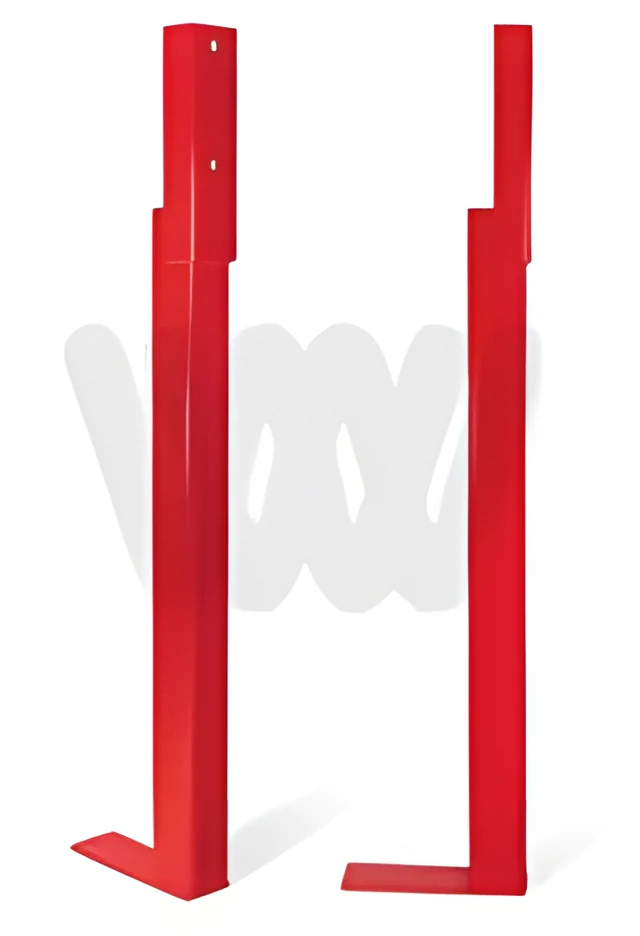
A proper kit is a manufactured, tested component designed to take over the load path around the damaged section. You remove or bypass the damaged portion and install the kit to carry load past it, restoring capacity by design rather than by hope.
What matters in one:
- It's engineered for the rack, matching column profile, section and connection method.
- It bolts on, in most cases, which is why repairs can usually happen in place without dismantling the run.
- It restores the section's load-bearing integrity to a defined outcome, rather than "it looks fine now."
- It leaves a paper trail. What was damaged, what was fitted, what the result is rated for. That record earns its keep at your next inspection.
We carry kits from single- and double-leg column repairs up to full structural sections, plus base plate and anchor work. The range is on the rack repair kits page.
One point of accuracy while we're here, because the industry throws this around loosely. RMI's certification programme is R-Mark, and it certifies manufacturers of rack systems and decking against ANSI MH16.1. Companies that distribute, resell or repair racks aren't eligible for it. There's no such thing as an "RMI-certified repair kit." What you should be asking instead: who made the kit, what was it engineered and tested to, and what's the repaired frame rated for afterwards.
When replacement is the right call
Repair usually wins, but not always. Lean toward replacement when several members on the same frame are damaged, when damage shows up at multiple levels of the same column, when that frame has been repaired before in the same spot, when the rack is old enough that matching components aren't available, or when the assessment shows the original design had little reserve capacity to start with.
There's also a case for treating a bad hit as an opportunity. If that bay keeps getting struck, replacing like-for-like just resets the clock. Adding column guards or end-of-aisle protection at the same time is what stops you having this conversation again next quarter.
Getting it assessed
Send us photos of the damage, straight on and from the side, with something in frame for scale. Add the rack manufacturer if you know it, the column profile, and what the bay is carrying. That's usually enough for a first read on whether you're looking at a repair or a replacement.
Start a repair enquiry, or read more about our repair and re-engineering services.