
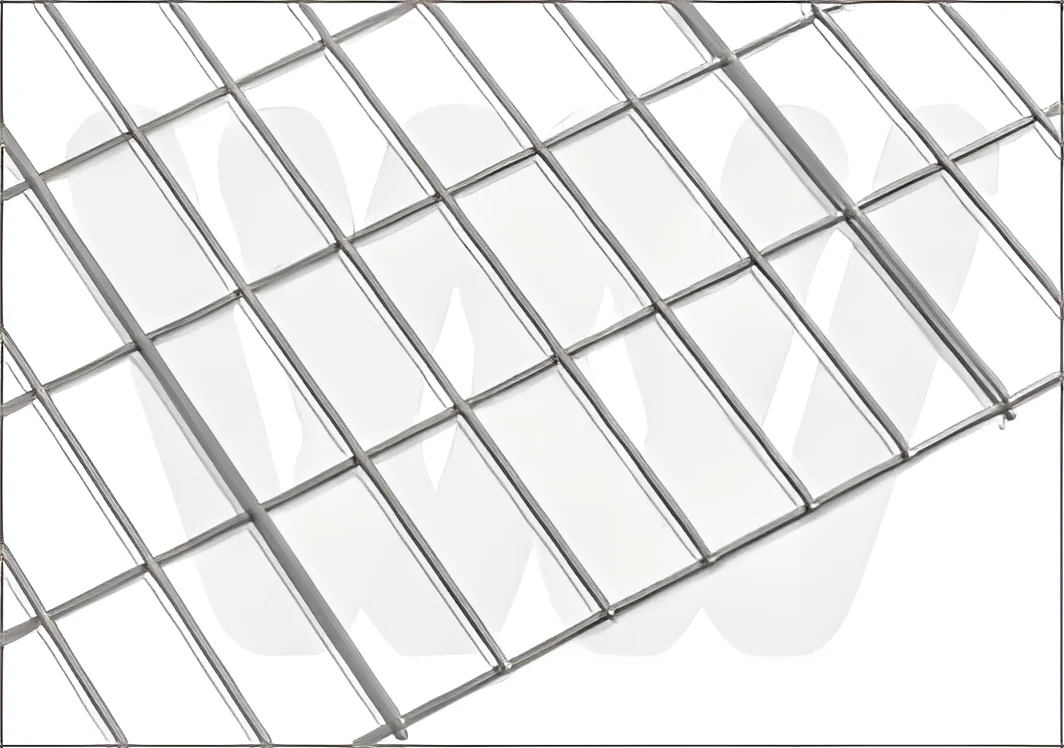
Decking usually gets picked on storage grounds. Will it hold the load? Will small cartons fall through? Will it survive a pallet being dragged across it? All fair questions.
But deck choice is also a fire protection decision, and that's the half nobody asks about until later. Usually when someone notices the sprinkler design on file doesn't match what's actually in the building.
The physics is simple enough. Ceiling sprinklers protect rack storage by getting water down through it. Flue spaces are the vertical route. Your deck is the horizontal obstruction sitting across that route at every single level. Open enough, and the design survives. Not open enough, and each level becomes a roof.
What "solid shelving" means in the standard
NFPA 13 draws the line on open area. Shelving of wire mesh, slats or other materials that's more than 50 percent open, and where the flue spaces are maintained, gets treated as open rack rather than solid shelving.
Two details in that sentence do most of the work, and both get skimmed.
"More than 50 percent" is strict. Exactly 50% open area does not satisfy "more than 50 percent." So a product marketed as "50% open" sits precisely on the wrong side of the line, not comfortably on the right side of it. If open area is what you're relying on, you want daylight above the threshold and a manufacturer figure you can point at.
Open area alone isn't enough. Open-rack status also depends on the flue spaces being maintained. A beautifully open deck in a rack whose transverse flues are blocked by overhanging pallets doesn't buy you open-rack treatment. The deck and the flues are one system, which is why this guide and in-rack flue space are really two halves of the same subject.
Why it matters commercially: getting classified as solid shelving can change the sprinkler protection the building requires, and in-rack sprinklers cost substantially more than ceiling-only protection. Deck selection is one of the cheapest points at which to influence that, and one of the most expensive to get wrong after the fact.
Edition note before you act on any of this. NFPA 13 is revised every three years, and the 2019 edition reorganized the storage chapters substantially. Work from the edition your jurisdiction has adopted, and get a fire protection engineer to confirm anything you're going to build to.
The deck types, on this axis
Wire mesh decking. The default for open-rack storage, since an open mesh grid passes water more or less freely. It also lets you see damage and debris on the level below, which inspectors like. The trade-off is small items and loose product falling through, which is what pushes people toward solid alternatives in the first place. Two honest caveats. Manufacturers of wire deck, ours included, tend not to publish an open-area percentage at all, so "it's open mesh" may be the only answer you get — ask anyway, and see question 1 above. And open mesh is not automatically open shelving: FM's own standard notes that mesh shelves can present the same hazard as solid ones where the stored commodity is not palletized and ends up forming a continuous surface on top of the deck.
Punched or perforated steel decking. A solid steel deck with a punched hole pattern. The useful thing about this category is that some products carry an FM Approval. The punched decking we supply is made by DACS, which holds an FM Approvals certificate for Punch Deck under Class 6914 — the standard that tests whether a deck passes sprinkler water at a rate equivalent to shelving with 70% or more open area. That's a recognized route to open-rack treatment that doesn't depend on you arguing about a percentage, and it's worth more than a raw open-area number precisely because a third party tested it. Note the two thresholds are not the same axis: NFPA 13's open-rack test is about being more than 50 percent open, while FM's equivalence is set at 70 percent. A deck can clear one conversation and not the other.
Solid steel decking. No openings. It's genuinely the right answer for some jobs: very small parts, contamination-sensitive product, washdown environments. On the fire side, though, it's solid shelving. Treat it as a deliberate decision with the sprinkler consequences understood, not as a default because it was easiest to source.
Everything in between. Slatted decks, timber, mixed constructions. They all land somewhere on the same axis, and the question stays the same: what's the open area, and is there a listing behind it?
What to ask a supplier
Before a deck goes on a quote, get these in writing.
- What's the actual open area, as a percentage? Not "it's open mesh." A number.
- Is that more than 50 percent, or exactly 50 percent? For this purpose those aren't the same answer.
- Does it carry an FM Approval or other listing? If so: to which standard, what open-area equivalence does it carry for sprinkler design, and is the approval current?
- What did you assume about my flue spaces? Open-area compliance assumes maintained flues. If your layout has a flue problem, the deck won't solve it.
- What's the load rating in my configuration? Fire compliance doesn't help much if the deck is under-rated for what you're putting on it. See how to determine pallet rack capacity.
Be wary of any blanket claim that a deck "meets NFPA 13." NFPA 13 is a sprinkler design standard, not a product certification, and no deck satisfies it on its own. A deck can support an open-rack classification, given the open area and maintained flues, but compliance belongs to the sprinkler design as a whole. Precise claims are a good sign about a supplier. Blanket ones aren't.
Choosing, in practice
The decision tree is usually short.
- Palletized product, no small-item fallthrough problem? Wire mesh, almost always. Cheapest route to defensible open area.
- Want a solid-feeling surface but still need open-rack treatment? Punched decking with an FM Approval behind it. That's the case this category exists for.
- Genuinely need a solid deck for contamination, washdown or very small parts? Take it. Just bring your fire protection engineer in before it's installed rather than after.
- Retrofitting into an existing building? Find out what the sprinkler design on file assumed before you change anything. Buildings get re-decked all the time without anyone checking, and the mismatch tends to surface at the worst possible moment.
The full range is on the pallet rack decking page, and the wire decking page covers the five mesh styles specifically. One caveat in the spirit of the questions above: for wire decking, neither an open-area percentage nor a capacity figure is a catalog number. The manufacturer builds each deck to a capacity you state, and publishes no open-area percentage at all — so those are quote questions, and we would rather tell you that than print a number we cannot source. Punched and solid decking do have published load tables, and those are on their product pages. If you'd rather have a recommendation for a specific bay and commodity than browse a category, tell us what you're storing and we'll scope it.